

Category
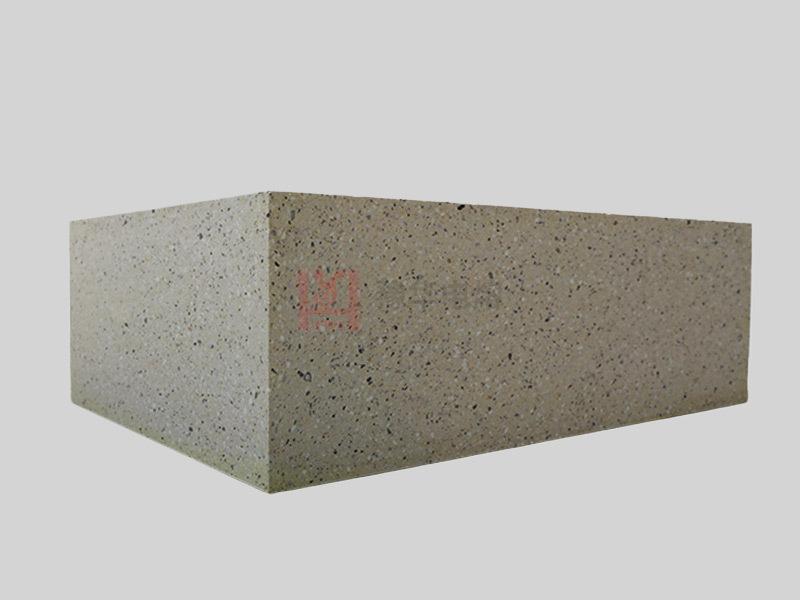

Clay pouring large brick
Classification:
Product Introduction
Product Details
Production method:
The main raw materials for clay-cast large bricks are bauxite and pyrolytic stones as aggregates, as well as silica fume, alumina micropowder, calcium aluminate cement and water reducing agent. This formula can select the corresponding grade of aggregate according to different use environments (customer requirements) to produce high-alumina castables with a bulk density of 2.3 to 2.6 and clay castables with a bulk density of 2.2 for customers to choose from. This formulation can be tailored to specific application requirements to ensure that the material properties meet specific use conditions.
The formula design of clay pouring large bricks takes into account a variety of physical and chemical performance indicators, such as refractoriness, volume density, apparent porosity, room temperature pressure strength, load softening temperature, etc., to ensure that the material can withstand high temperature, pressure and other physical stresses during use. For example, the refractoriness is usually required to be not less than 1750 ℃, the bulk density is required to be not less than 2.3 g/cm, the apparent porosity is required to be less than 17%, the normal temperature compressive strength is required to be greater than 50 MPa, and the load softening temperature is required to be not less than 1400 ℃. The satisfaction of these indicators ensures that the clay pouring brick can still maintain stable performance under high temperature and pressure environment.
In addition, the formula of clay cast large bricks also involves the selection and treatment of raw materials, such as the selection of bauxite and pyrotechnic stones, as well as the combination of silica powder, alumina powder, calcium aluminate cement and water reducing agent, which help to improve the fire resistance, strength and durability of the material. Through reasonable formula design, large clay pouring bricks can be produced to meet the needs of different applications, which are widely used in industrial and architectural fields, such as the bottom and wall of glass melting furnaces.
Physical and chemical indicators:
Physical and chemical index | |
Project | Performance Index |
Refractory Degree (℃) | ≥ 1750 |
Bulk Density (g/cm3) | ≥ 2.3 |
Percent Porosity (%) | <17 |
Normal Temperature Compressive Strength (Mpa) | >50 |
0.2Mpa Load Softening Temperature (℃) | ≥ 1400 |
1100 ℃ x2h ****** Line Change Rate (%) | ±0.2 |
Al203 | ≥ 45 |
Fe203 | ≤ 1.3 |
Keywords:
Clay pouring large brick
Kiln Display
Feedback
Leave an online message and get free product quotes
CONTACT US
WhatsApp:
E-mail:
Tel :
Address:
The Industry Park, XinMi City, Henan Province