
Blog
Yuhua Fused Cast
Application Fields of Cast AZS Bricks (Electrofused Zirconia–Alumina Bricks)
Time:
Aug 06,2026
Core advantages of AZS bricks: resistance to glass melt erosion, high‑temperature dimensional stability, resistance to alkaline slags, excellent thermal shock resistance, high hot strength, and resistance to corrosion by molten alkali vapors. Their primary application is in various glass melting furnaces, with extensions into specialized high‑temperature industrial kilns; detailed industry segments are as follows:
I. Glass Industry (the primary application area, with the largest consumption volume)
1. Float Glass Melting Furnace
Critical areas: the pool walls and bottom lining in the melting section, the upper‑structure parapet, the tuyere openings of the small furnaces, the liquid‑run holes, the corners of the charging ports, the partition walls in the cooling section, and the material chutes.
Function: Prolonged exposure to high-temperature soda-lime-silica glass melt; resists erosion and scouring by the molten glass, thereby extending furnace life and reducing defects such as glass inclusions and bubbles.

2. Daily-use glass kiln (wine bottles, beverage bottles, drinking glasses, tableware glass)
Suitable for all‑electric melting furnaces, flame‑fired furnace melting pools, flow channels, and feed troughs; particularly in high‑alkali glass‑melting environments, AZS exhibits far superior erosion resistance compared to conventional sintered bricks.

3. Photovoltaic Glass (Photovoltaic Rolled Glass, Cover Glass)
Photovoltaic glass contains a high proportion of soda ash and is highly corrosive; therefore, the pool walls, furnace sills, and liquid‑flow ports in the melting section must be lined with 36#/41# high‑zirconia AZS refractory material, which is the key refractory for ensuring long service life in photovoltaic furnaces.
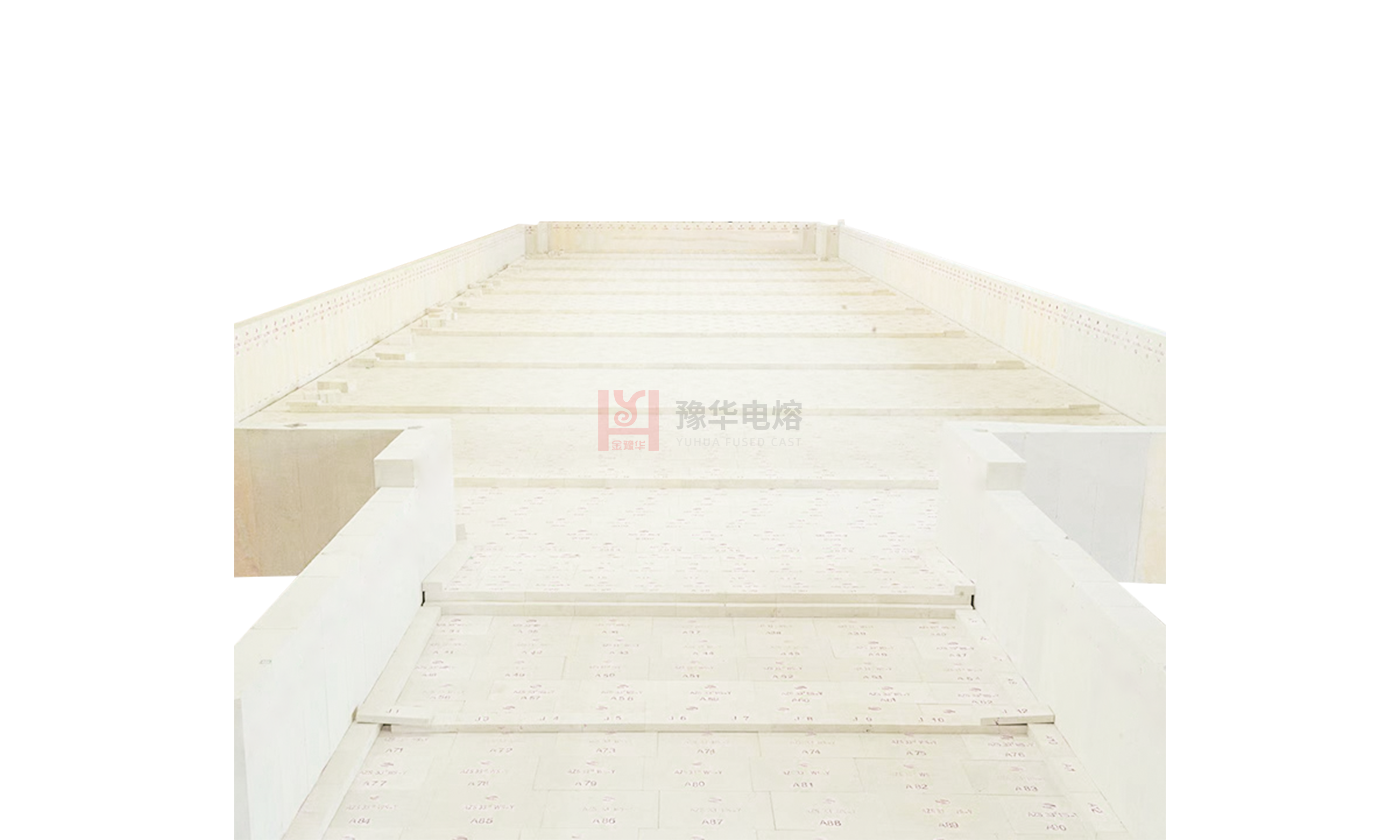
4. Electronic Glass / Display Glass (LCD Substrates, Cover Glass, Aluminosilicate Glass, Borosilicate Glass)
Borosilicate glass and alkali-free glass exhibit exceptional resistance to corrosion; the oxidation method, which produces low bubble content, is employed in the feeder and refining sections to prevent refractory materials from leaching impurities that could degrade glass quality.

5. Glass Fiber Furnace
The drawing tank, the upper wall of the bushing, and the molten glass channel resist the erosive action of the high‑velocity glass flow, thereby reducing strand breakage.
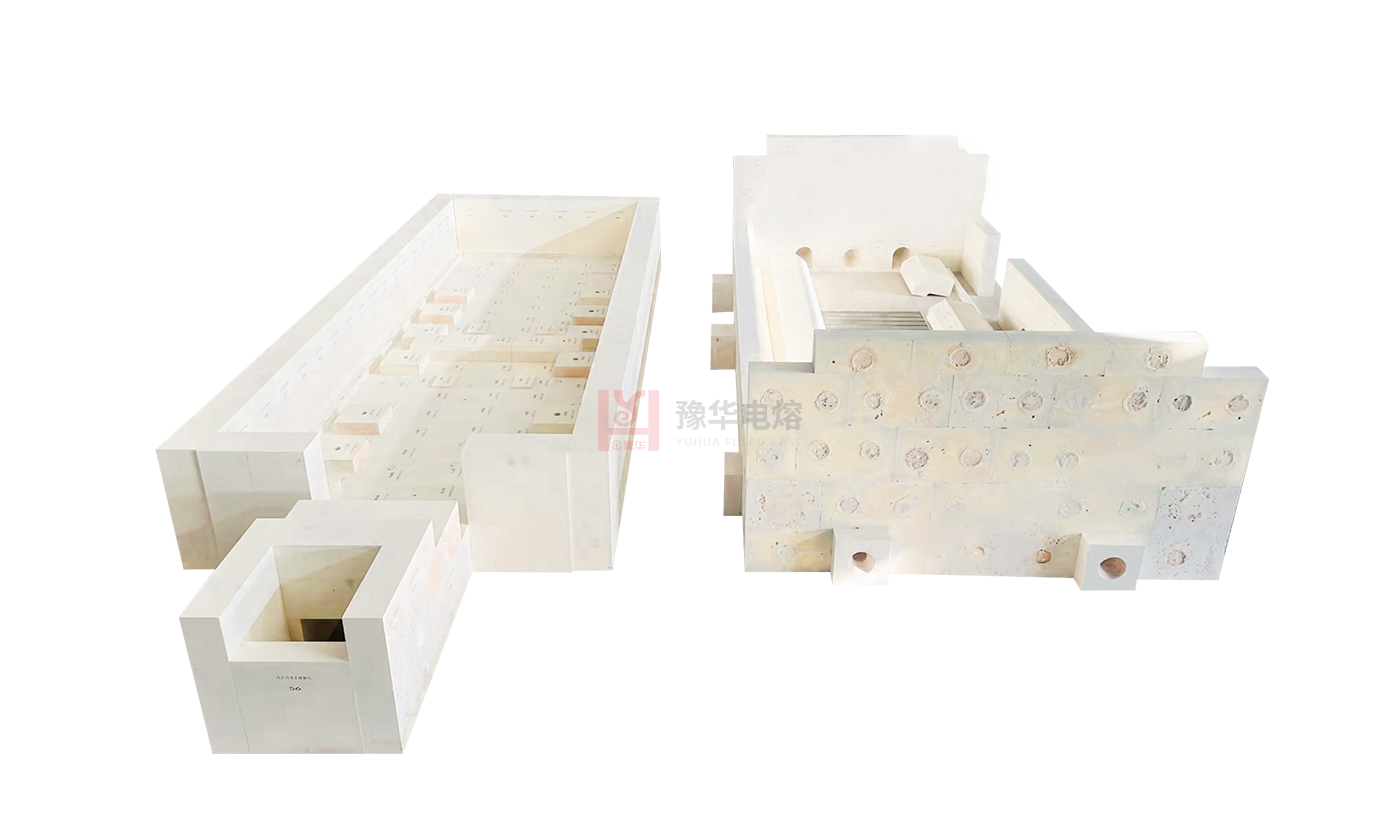
6. Special Glass
Lining for melting tanks in furnaces used for manufacturing pharmaceutical glass, crystal glass, art glass, microcrystalline glass, and lead glass.

II. Different grades of AZS refractory materials are selected for different sections of the glass furnace.
33#AZS: Conventional soda-lime glass, suitable for general temperature and corrosion‑resistant applications; offers excellent cost‑performance.
36#AZS: Photovoltaic glass, high‑strength erosion zone;
41#AZS: Longer service life in critical areas subject to high erosion and scour, such as flow‑through holes, kiln sills, and corners.
Oxidation method AZS: used for high-end glass to reduce bubbles, inclusions, and contamination from refractory material leaching; the reduction method is predominantly employed for ordinary household glass.
III. Other High-Temperature Industrial Applications and Expansions
1. Metallurgical Industry
Nonferrous metal smelting: lining for molten aluminum, zinc, lead, and tin furnaces, resistant to corrosion by molten metals and slag.
Glassification smelting of precious metals and lining for slag‑treatment furnaces.
2. High-Temperature Chemical Kilns
Lining for molten alkali, soda ash calcination furnaces, and caustic soda melting tanks; resistant to alkaline vapor corrosion.
Liner for high-temperature molten reaction vessels used in the production of borides and phosphates.
3. Waste Incineration / Hazardous Waste Incinerator
The high-temperature melting section of the incinerator and the lining of the fly ash melting furnace resist highly corrosive flue gases and molten fly ash slag.
Note: In areas of conventional incinerators where furnace temperatures fluctuate significantly, refractory materials with excellent thermal shock resistance should be used; AZS refractories are particularly well suited for zones in direct contact with molten slag.
4. Sintering Kiln for Ceramics and Glass-Ceramics
In the high-temperature melting zone of a glass-ceramic crystallization furnace, resistance to glass-phase corrosion is ensured.
IV. Scenarios Where It’s Not Suitable (Avoid These Pitfalls)
Prolonged exposure to highly acidic slag (e.g., high-silica acidic slag) results in less severe erosion than that caused by basic slag; however, if the slag contains substantial fluorides, the corrosive effect is further exacerbated.
Areas subject to frequent, severe thermal cycling (AZS refractories generally exhibit poor thermal shock resistance; repeated rapid heating and cooling can easily lead to cracking and spalling).
Steelmaking converters and blast furnaces (the steel slag system is not compatible; magnesium-carbon and aluminum-carbon refractories are more suitable).
V. Detailed Application by Structural Component (Inside the Kiln)
Parts in contact with the glass melt: vertical bricks of the tank wall, lining bricks of the tank bottom, kiln sill, liquid‑flow opening, discharge port, and material chute.
Upper flame space: hearth wall, small furnace tongue, fire‑blowing port, and the upper checker bricks of the regenerator (special AZS checker bricks);
Stress concentration zones at corners—namely, the feed‑port corner and the ear‑pool—must be fabricated from high‑quality, shrinkage‑free cast AZS to prevent early cracking and material leakage.
Recommended content
Share to
CONTACT US